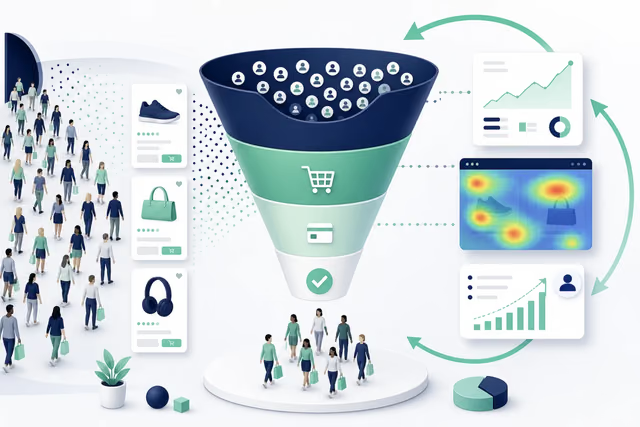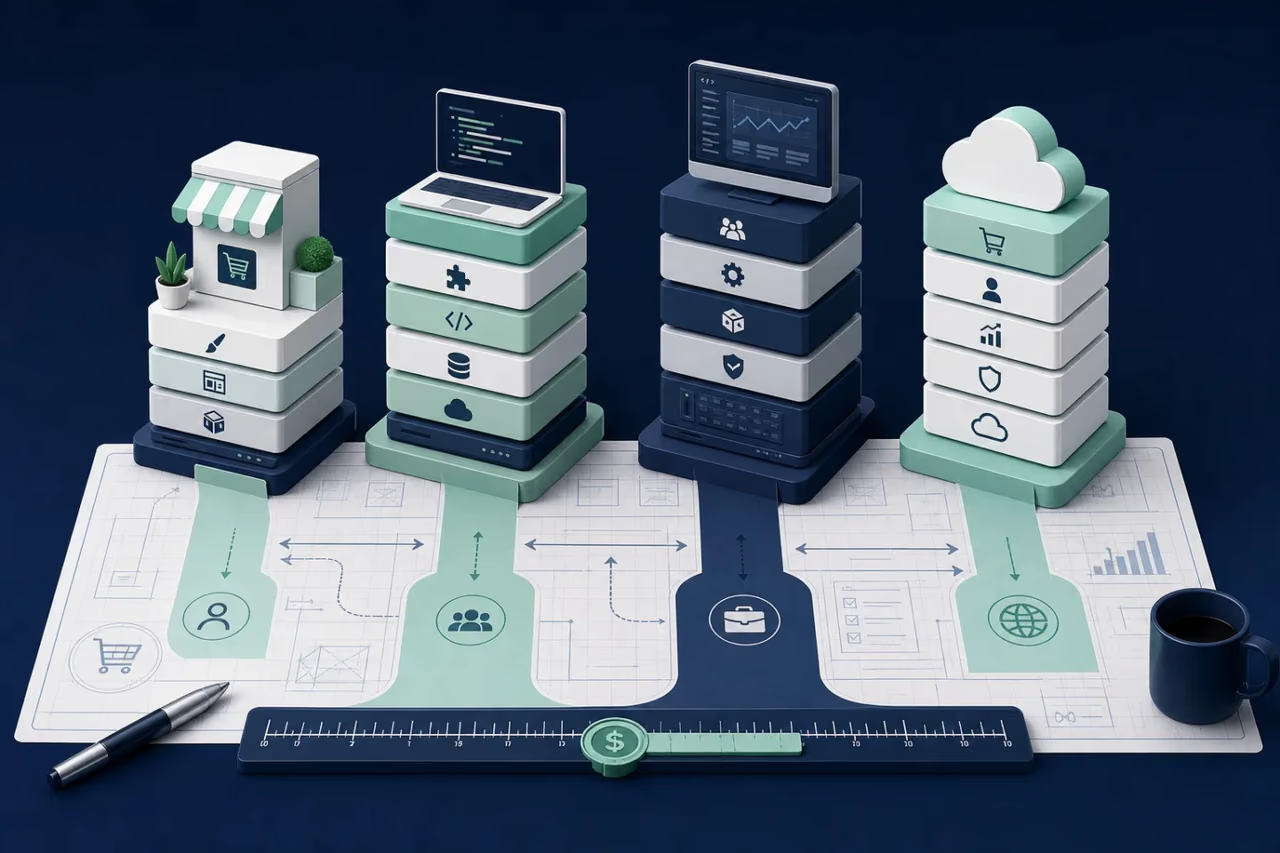

The cost of an ecommerce website comes from its sales workflows, integrations and order management. A store with fifty products and one payment method is a different project from a B2B platform connected to an ERP, several warehouses and customer-specific price lists. Both may run on the same platform.
The technology sets the starting point, while the budget covers scope, UX, integrations, data migration, testing and post-launch care. Comparing these elements helps you plan spending and choose a solution for your business.
Compare proposals for the same scope: features, integrations, data, testing and launch. Add subscriptions, licences and ongoing support and development to the budget.
Example development budgets
| Platform | Example net build budget | Development scope | Ongoing costs |
|---|---|---|---|
| WooCommerce | £1,400–£3,600 | WordPress content, catalogue, theme, plugins and integrations | Hosting, licences, updates and plugin compatibility testing |
| BigCommerce | Scoped after discovery | Catalogue, storefront, apps, sales channels and integrations | Subscription, apps, payment processing and integration support |
| OpenCart | Scoped after discovery | Catalogue, theme, extensions, modifications and integrations | Hosting, extension licences, updates and compatibility testing |
| Shopify | £3,400–£9,400 plus subscriptions | One store operation built around plan features, apps and integrations | Subscription, apps, payment-related charges and theme and integration development |
| Magento 2 | £8,400–£20,700 and above | Coordinated stores, shared data or substantial bespoke commerce workflows | Hosting, licences, security, updates, testing and development |
These are illustrative development budgets, not platform licence prices. BigCommerce and OpenCart need their own scope-based estimates covering the storefront, extensions or apps, data and integrations. Compare current subscription and licence terms alongside implementation and ongoing support.
Working methods affect the budget too. AI tools support code analysis, repeatable implementation work, tests and documentation. An example from my work: for engineering tasks suited to AI support, I need 50–60% fewer development hours than before. The full project schedule also includes workshops, business decisions, architecture, code review and acceptance. GitHub research into developer productivity explores the use of these tools.
Agreed rules for reconciling discounts in the ERP and clear ownership of product data give the team a concrete basis for implementation. Reusable components and development tools help deliver that defined scope efficiently.
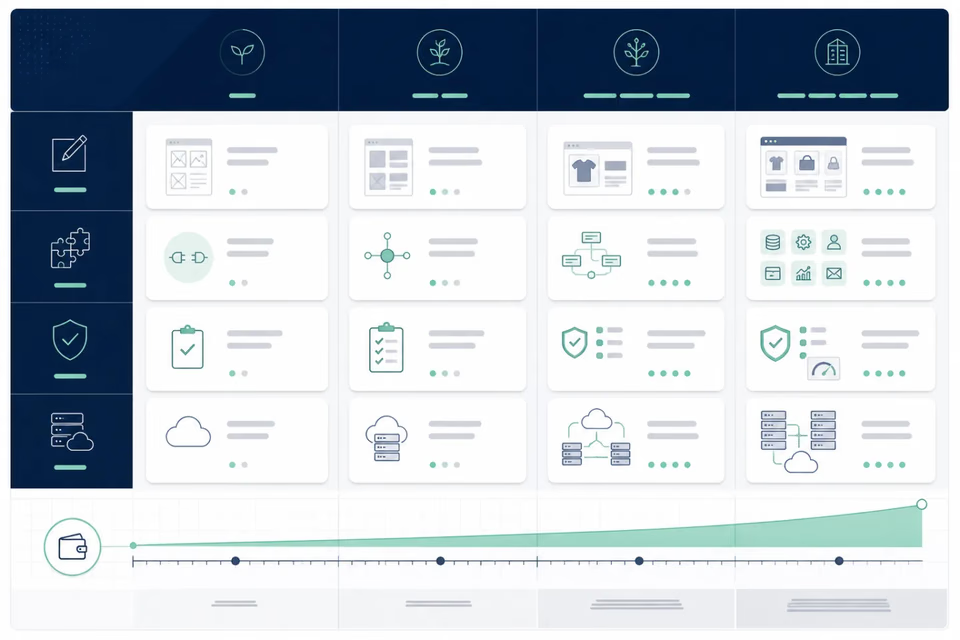
Budgets grow with the number of processes, integrations, exceptions and delivery responsibilities.
What really affects ecommerce development cost?
The largest differences usually appear in six areas:
- UX and UI: an off-the-shelf theme, adaptation of a component system or a bespoke design.
- Features: pricing rules, configurators, B2B, marketplaces, languages and currencies.
- Integrations: ERP, PIM, WMS, CRM, payments, couriers and finance systems.
- Data: migration of products, customers, orders, addresses and discount history.
- Quality: automated tests, performance testing, security and user acceptance testing.
- Launch: SEO redirects, final synchronisation, monitoring and stabilisation.
Integrations and data are the two areas I see underestimated most often. An API specification shows which endpoints exist; it rarely settles event order, bad records, duplicates, retries or operational ownership. Exceptions, not the happy path, tend to consume the time.
How do the platforms differ?
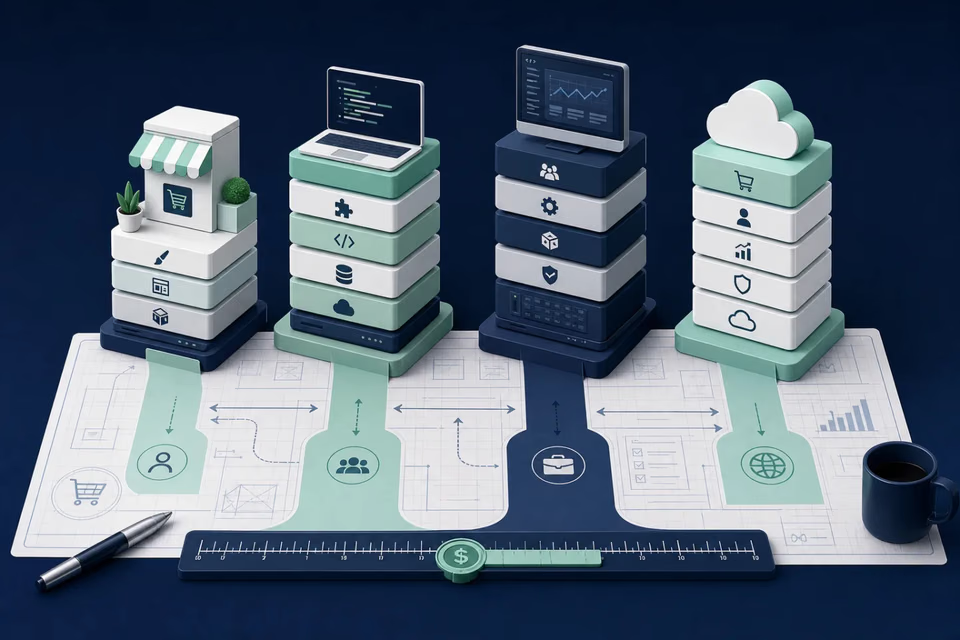
Each platform strikes a different balance between speed to market, flexibility, maintenance and scale.
WooCommerce
WooCommerce combines commerce with WordPress content. When assessing an existing store, review which plugins own checkout, pricing and customer data, and what updating them involves. Migration should follow sales requirements and running costs; a well-suited store can remain on its current platform.
BigCommerce
BigCommerce provides a hosted commerce platform with storefront, catalogue and order-management features. For an existing store, review the apps, integrations and sales channels your team uses. Include subscription costs and the work needed to maintain those connections when comparing continued development with migration.
OpenCart
OpenCart provides a self-hosted commerce platform with extensions and theme customisation. Review the extension inventory, code modifications, update compatibility and integration support. Your budget should cover hosting, maintenance and testing as well as the changes needed for launch.
Shopify
Shopify is the first choice for one online-store operation with catalogue, buying and order flows supported by native features, apps and integrations. A bespoke theme provides coherent branding and convenient content editing. Shopify Markets supports several markets and languages within one store.
Shopify includes hosting and SSL. The delivery plan defines B2B features, checkout, payments and API access within the selected plan. Ongoing care covers themes, apps and integrations; the operating budget includes subscriptions, apps, applicable transaction charges and development.
Magento 2
Magento 2 provides coordinated catalogue, customer and commercial management across stores. It also supports substantial bespoke pricing, ordering and backend workflows, including within one store. Its website/store/store-view hierarchy lets you define shared data and separate settings for each sales channel.
Shopify also supports independent stores with separate commerce data. The comparison covers synchronisation and per-store app costs alongside Magento’s coordinated management and maintenance. Adobe Commerce with its B2B extension provides company accounts, shared catalogues and purchase approvals. Magento Open Source delivers that scope through selected modules or bespoke development.
How should project stages be priced?
Compare proposals stage by stage: discovery, UX and UI, development, integrations, data migration, testing, launch and stabilisation. For each stage, agree the deliverables, price, responsible person and acceptance criteria. This gives you a clear view of the complete project budget.
You receive a process map, a defined first release and a development roadmap. This aligns the budget and delivery stages with your sales priorities. Explore the delivery process.
A useful estimate records the inputs needed for delivery: API access, data preparation and design assets. Agree who provides each item and when it will be ready. The design scope covers mobile views, error states and administrative components, so both teams can plan their work.
Launch budget or total cost of ownership?
The launch estimate is only part of the bill. Hosting, licences, security updates, monitoring, integration changes and campaign support continue after go-live. SaaS platforms put more of that cost into subscriptions. With open-source software, more depends on code quality and the discipline of maintenance.
Compare launch costs with the next three years of operation. Automated tests and a consistent component system make later changes easier. Schedule features with less commercial value for subsequent phases.
What should a complete proposal include?
A complete proposal connects the price with defined deliverables and responsibilities. Reusable components and a focused first release help you direct the budget towards the most valuable sales processes.
- Data migration, testing, launch and stabilisation scope.
- Integration mappings, error handling, retries and monitoring.
- Licences, subscriptions and ongoing support costs.
- Design deliverables and the data or assets each team provides.
- Acceptance criteria, delivery stages and a process for agreeing further work.
How can you protect the budget?
- Write acceptance criteria for business-critical features.
- Separate the launch scope from the post-launch backlog.
- Agree delivery inputs, client tasks and the scope of additional work.
- Budget for licences, hosting, monitoring and at least one year of maintenance.
- Keep a contingency for data and integration discoveries.
Choose a solution that fits the company’s processes, team and growth plan. Focus the first release on core sales workflows, with data preparation, testing and launch support included. Schedule further features in the development roadmap.
Plan your next step
Plan a store that makes buying and day-to-day work easier. Compare Shopify development with Magento 2 services for your store operations, shared data and sales rules. You receive a platform recommendation, scope, budget and plan for the next stages.