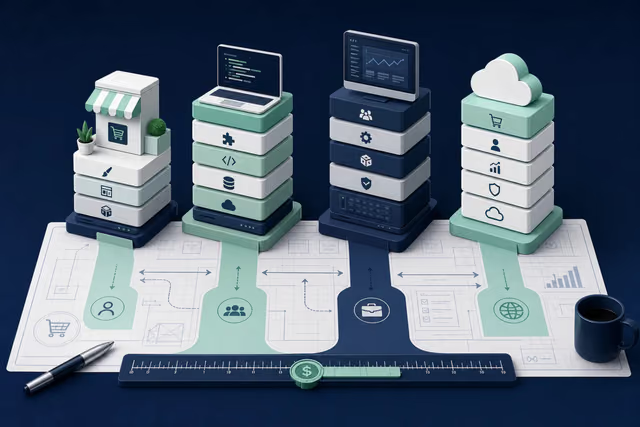

Compare ecommerce proposals through outcomes, scope and responsibilities. A budget covering discovery, UX, data migration, testing, launch and stabilisation shows the complete route to a working sales channel.
Breaking down these stages lets you see what the store will receive, which tasks your team will handle and how to plan spending.
How should you compare scope and budgets?
Compare the same features, integrations, environments and acceptance criteria. Agreed responsibilities and delivery stages let you compare complete development budgets across technical partners.
A comparable estimate identifies data sources, decision owners and acceptance criteria. “ERP integration” may mean a basic order export or two-way synchronisation of stock, prices, customers, invoices and errors. It is one line in a brief but a completely different budget.
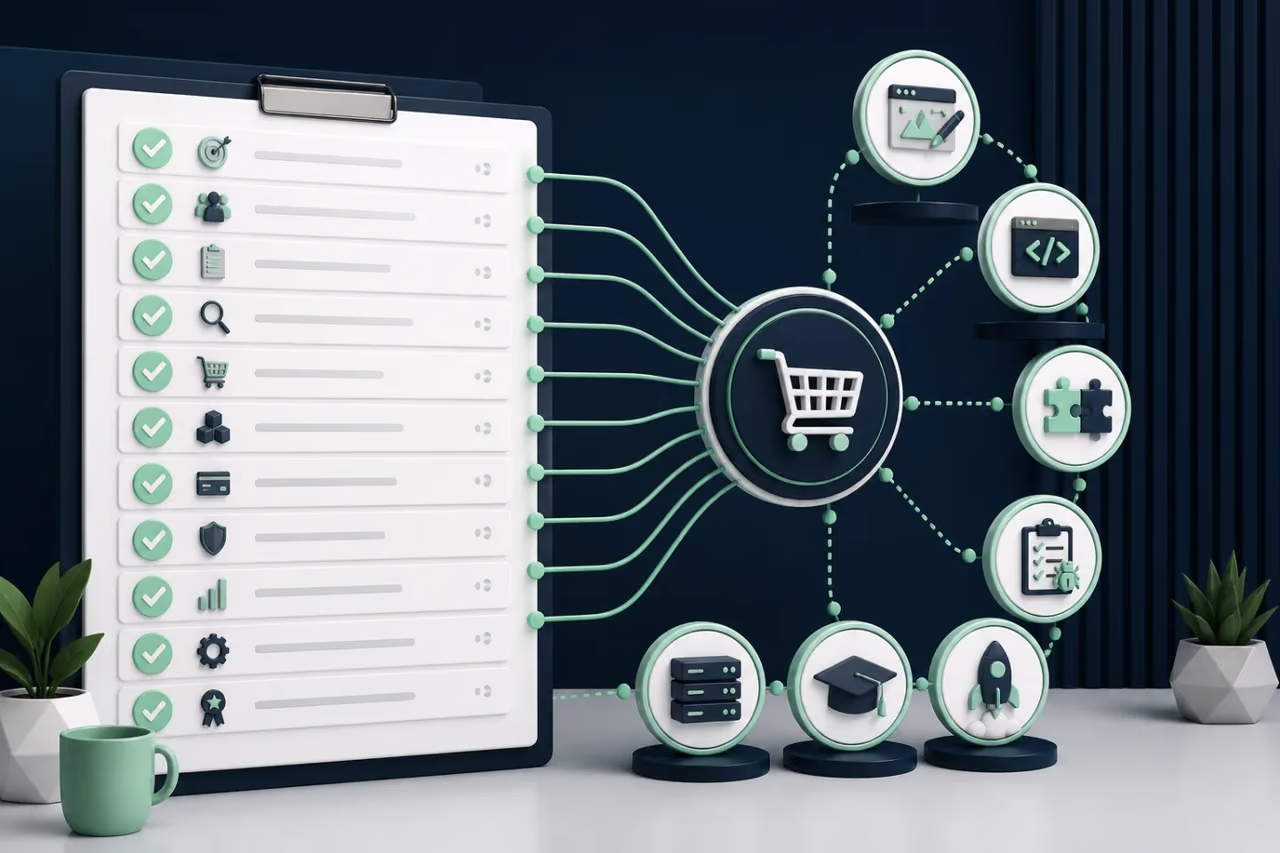
A complete budget includes the work around development, not only the code itself.
What belongs in an ecommerce development budget?
- Warranty and defects. Which defects are included, for how long and under what response rules?
- Acceptance feedback. Is correction of issues found during acceptance included or charged separately?
- Analysis and acceptance criteria. Who documents processes, user stories, exceptions and the definition of done?
- Extensions and modules. Does the proposal include selection, purchase, configuration, customisation and compatibility testing?
- Licences and subscriptions. Which costs recur monthly or annually?
- Project management and QA. Are planning, reviews, testing and risk reporting included?
- Integrations. Does the price cover both ends, data mapping, error handling and retries?
- UX and UI. Are you receiving a standard theme, an adaptation or a bespoke component system?
- Workshops and meetings. How much time is allocated to decisions, demonstrations and acceptance?
- Hosting and environments. Are development, test and production environments, backups and monitoring included?
- Training and documentation. Who prepares the client team to operate the store and its integrations?
For each item, record the delivery arrangement: included in the build, handled by your team or scoped as a separate stage after discovery. This makes the budget and both teams’ tasks clear.
How should you compare proposals?
A simple table makes proposals easier to compare. For each item, record whether it is included, who owns it and which result will be accepted.
- Scope: what will actually be delivered?
- Assumption: which data, decisions or services must the client provide?
- Exclusion: what has deliberately been left out?
- Acceptance: how will both sides decide that the item works?
- Recurring cost: which licence or subscription continues after launch?
Describe the features and data flows included in a standard checkout, migration or integration. A short list of buying scenarios gives both teams a shared basis for development and acceptance.
What is the role of discovery?

Discovery translates business processes into architecture, acceptance criteria and a delivery plan.
Discovery delivers a map of processes, integrations, data, roles, failure scenarios and architectural decisions. You receive the basis for a fixed-price proposal or a Time & Materials budget.
For a complex Magento 2 programme, a separate discovery stage lets you set priorities before development. You can choose the launch scope, phase integrations and direct the budget towards the most valuable processes.
Discovery focuses on pricing rules, data quality, external system capabilities and architectural decisions. You receive the agreements needed for the first release and an ordered roadmap for further development.
Which costs and tasks stay with the client?
Plan your team’s time for data preparation, design approval, business-process testing and integration decisions. Named owners and decision dates make coordination with your technical partner easier.
Content, product images, policies, payment-provider agreements and changes on the ERP side also often remain with the client. Put those tasks into the same plan, give each one an owner and add a date. They are real project costs even when they never appear on the development invoice.
How should you plan contingency and post-launch cost?
Keep contingency for data preparation, external API adaptations and findings from testing. Set the amount around the migration scope, system documentation and trial integration results.
Calculate the first year of operation separately: hosting, licences, monitoring, security fixes, platform updates and further development. Include a stabilisation period after launch, when unusual production data and peak traffic expose issues that were difficult to reproduce in a test environment.
A complete checklist makes scope, costs and responsibilities clear. You can compare proposals covering the same outcomes and see exactly what your store and team will receive.
Plan your next step
Shopify development is the first choice for one online-store operation with buying and order flows supported by native features, apps and integrations. Magento 2 store development provides coordinated stores and shared data or substantial bespoke commerce workflows, including within one store. Compare the same scope and three-year ownership costs: Shopify plans, apps and ongoing development, or Magento hosting, licences and support and development.