Two Magento 2 shops can look nearly identical above the fold and cost very different amounts. The difference usually does not sit in the mock-up. It is hidden in data, integrations, failure handling, B2B rules, testing and responsibility for the launch.
Treat £10,000 and £29,900 as model net examples, not an APK Studio price list. I use them to show what can sit behind the same short phrase: “Magento 2 implementation”.
Why is this not the price of the platform?
Magento Open Source can be downloaded without a licence fee, but a free engine does not make a free shop. A working store consists of discovery, design, configuration, code, integrations, data, testing and launch. Adobe Commerce adds its own licence model.
The largest part of the implementation budget is the work required to build a specific sales operation. A standard process using established components may be relatively lean. A system reflecting individual trade agreements, several warehouses and an unusual order flow grows much more quickly.
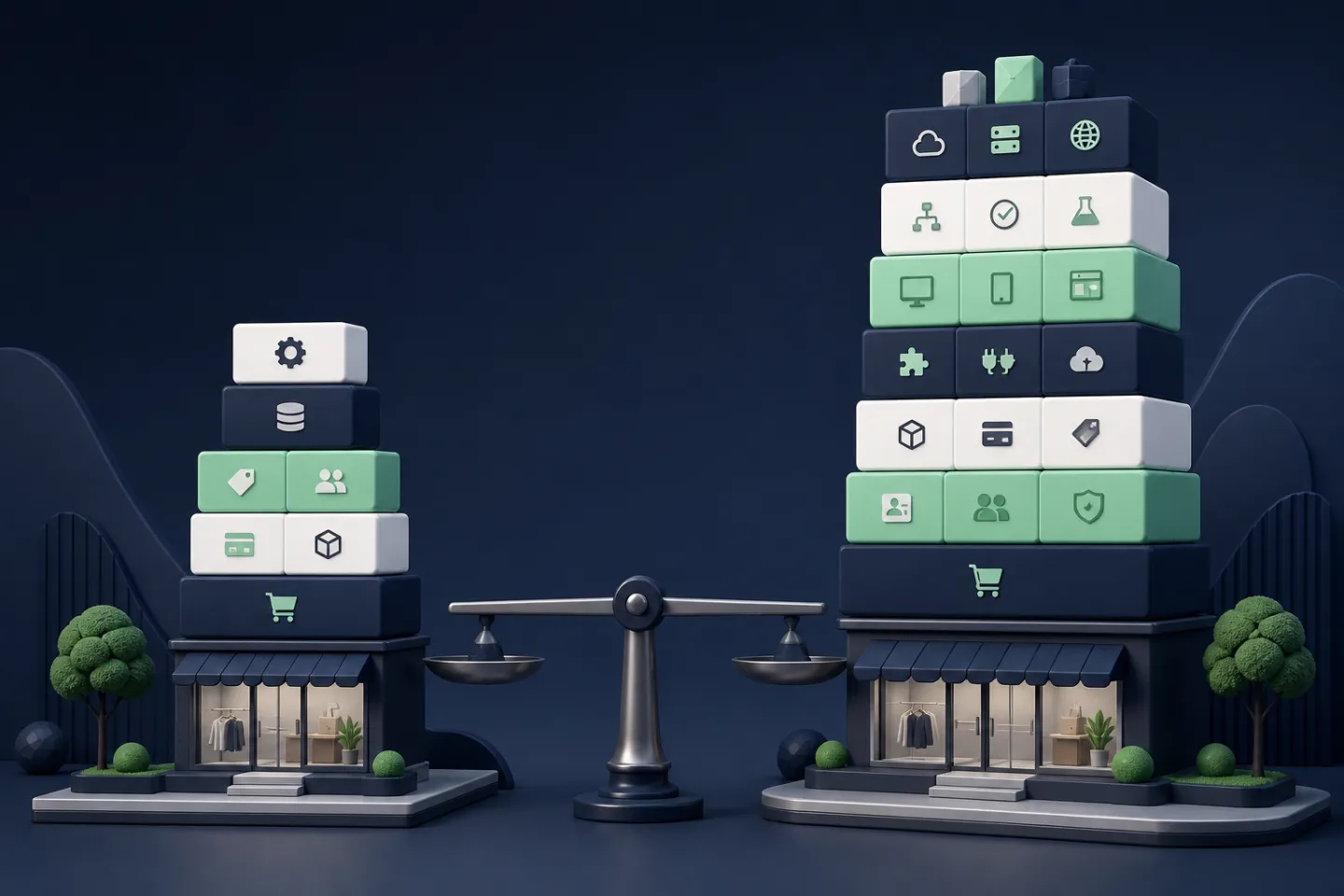
What do two example scopes include?
| Area | Scope closer to £10,000 | Scope closer to £29,900 |
|---|---|---|
| Discovery | Short discovery, standard processes | Workshops, architecture and many exception scenarios |
| Frontend | Adaptation of an existing component system | Bespoke UX and UI with an extensive design system |
| Integrations | One well-documented integration | ERP, PIM, WMS, CRM and asynchronous processes |
| Features | Standard B2C | B2B, roles, limits, approvals and complex pricing |
| Testing | Functional testing and UAT | Automation, performance, security and regression |
| Launch | One migration and short stabilisation | Migration rehearsals, rollback plan and extended hypercare |
The £10,000 route can be a perfectly good implementation if it genuinely matches the business need. Trouble starts when it is expected to behave like the £29,900 route. The invisible work then quietly disappears: exception analysis, migration rehearsals, automated regression and monitoring.
Which areas change the budget?
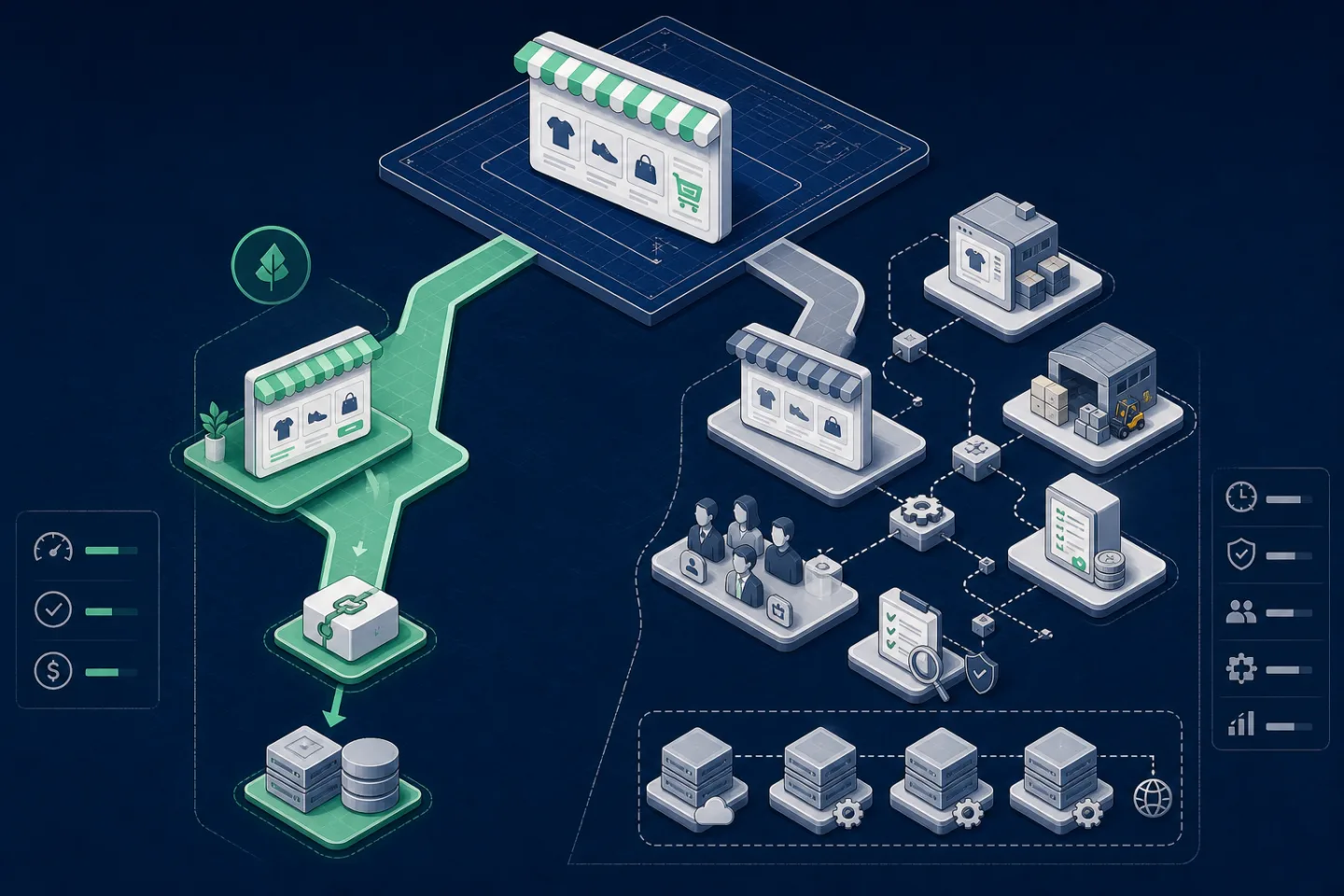
Discovery
When the process is standard and well documented, discovery can be short. Multiple companies, price lists, warehouses and buyer roles require a fuller model of processes, data and responsibility. The most expensive decisions are often the ones made halfway through implementation.
Integrations and data
An available API is not a finished integration. Teams still need to define the source of truth, mappings, event order, error retries, monitoring and historical migration. Old identifiers, incomplete records and unexpected business rules have a habit of appearing only when real data is tested.
Frontend and features
Adapting established components is quicker than creating a bespoke design system. Search, product configuration, promotions, company accounts, credit limits and a custom checkout also change the scale of delivery. Even “B2B” may mean one extra customer role or a full order-approval system.
Testing and stabilisation
The budget grows when the supplier owns automated regression, load testing, migration rehearsals, monitoring and post-launch availability. It is not the glamorous part of a project, but it reduces the very real risk of stopping sales.
How should you compare proposals?
- Compare processes and acceptance criteria, not the number of screens.
- Check who owns the other side of every integration.
- Separate licences and recurring costs from implementation.
- Ask about data migration, SEO and the launch plan.
- Define defects, change control and the warranty period.
Ask for assumptions and exclusions too. If a proposal assumes completed designs, clean data and an available API, it should say so. Then you can see what is likely to happen to the budget when one of those assumptions proves false.
Where should you avoid cutting corners?
When a budget needs to come down, discovery, testing and launch support are tempting targets because customers never see them on screen. That is usually the wrong direction. These areas protect the project precisely when something goes wrong.
Reduce the business scope instead: launch fewer markets, postpone a custom workflow or start with a standard checkout. It is much harder to rescue a weak data model or an integration that every order depends on.
My rule of thumb: cut optional scope, not the foundations of quality. A smaller shop that behaves predictably is better than a large release with no regression tests or rollback plan.
When should you phase a Magento project?
If the complete scope exceeds the budget, do not randomly remove testing or discovery. Define a deliberate first release around the process that generates most value, then add markets, B2B features or automation in planned stages. The architecture should account for those stages from the beginning.
Our Magento 2 store development service covers the route from discovery to launch. A well-defined scope lets you decide whether the programme should be smaller, larger or deliberately phased.
What happens to the budget after launch?
Launch is not the end of the cost. Magento 2 needs security updates, monitoring, infrastructure care and extension compatibility checks. There are also extension licences, changes to integrations and features driven by new business processes.
A well-structured and properly tested store is cheaper to evolve because the team does not fear every update. I therefore look at implementation cost together with the next few years of ownership. A cheap architectural shortcut has a nasty habit of returning on every future development invoice.